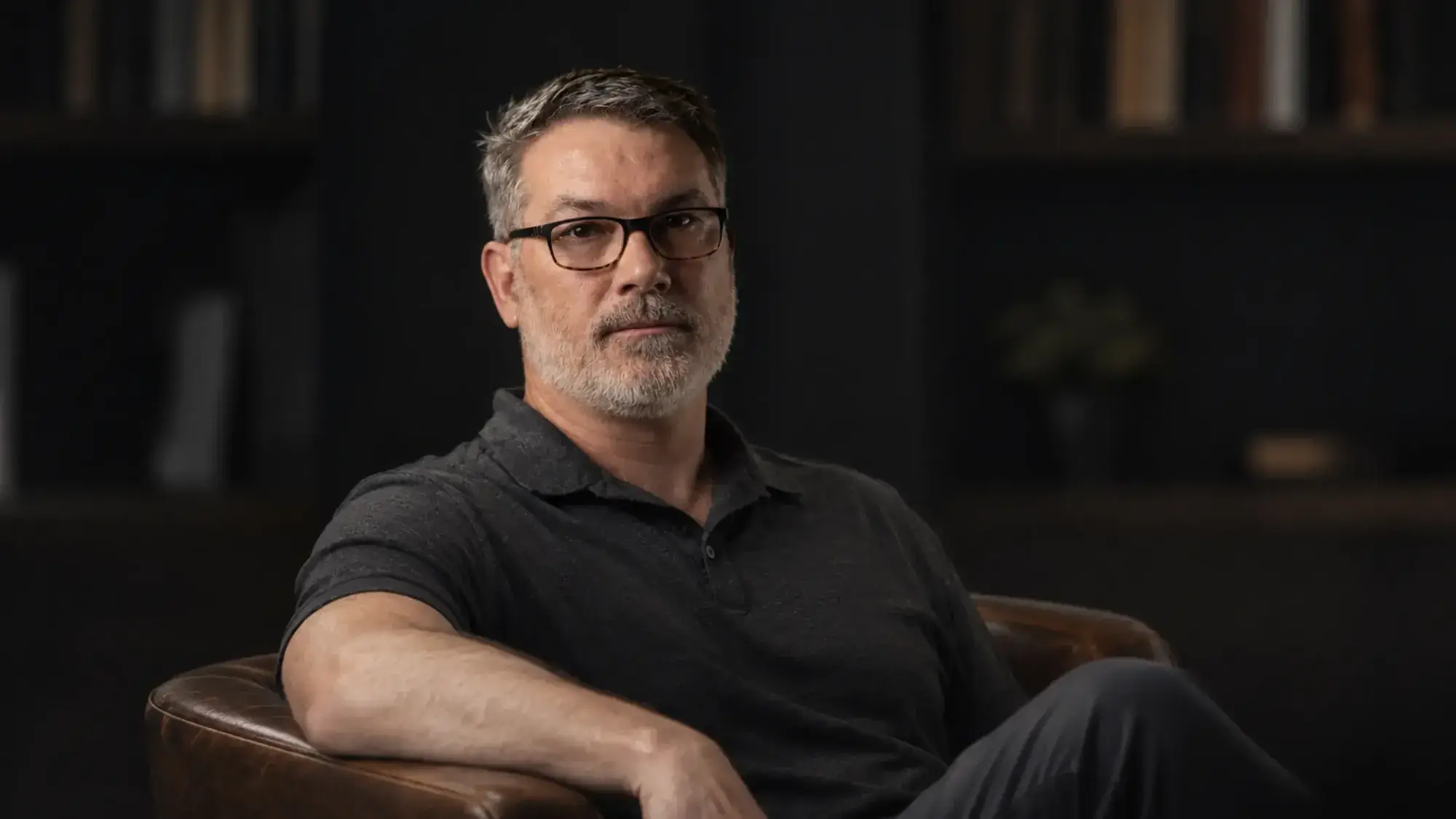
Pat Scannell is a technologist and researcher, and the author of The Disruption of Thought.
Technology is changing how we think. Faster than we can adapt.
We think with three things: a brain, a culture, and our tools. For all of human history they moved at a pace that let each adjust to the others. That's no longer the case.
The argument of the first book, in one figure.
Thinking emerges where three planes overlap: the biological, the cultural and the technological. For most of human history they stayed in register. That has been disrupted.
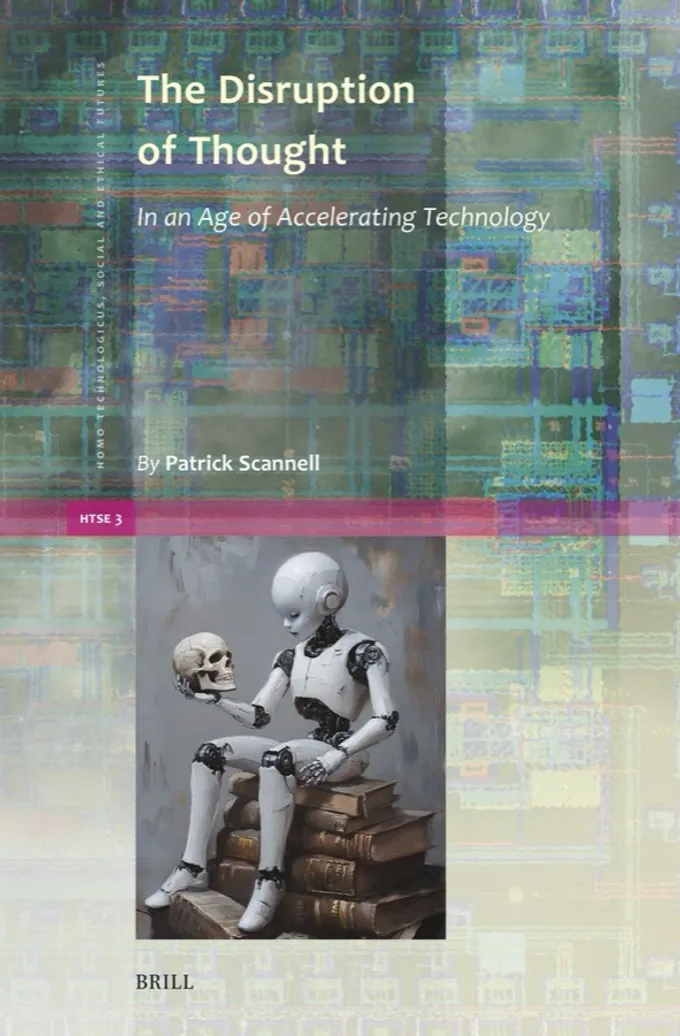
The Disruption of Thought
In an Age of Accelerating Technology
Published by Brill, October 2026, as the third volume in the series Homo Technologicus, Social and Ethical Futures. Foreword by Vint Cerf.
Thinking, the book argues, is not something a brain does on its own. It emerges from the connections between three planes: the biological, the cultural, and the technological. Change one and the others shift. For most of our history the three moved slowly enough to keep each other in balance.
That balance is gone. Drawing on neuroscience, evolutionary psychology, philosophy, economics and sociology, and reviewed by more than a hundred thought leaders before publication, the book maps what acceleration is doing to the way we think, and what we can still deliberately do about it.
Hardback 978-90-04-73714-3
E-book 978-90-04-73916-1
“This is one of the most important books of the decade.”
“As mind-bending as it is illuminating, this book will push you to think differently about nearly everything in your life.”
“It ironically made me think harder about my own daily use of and reliance on programmable technology. It made me think!”
The pauses are gone.
Every major technology used to arrive with a quiet period after it. Writing, print, the telegraph: each one reshaped how people thought, and then society (cultural adaptations developed by humans) had decades, sometimes centuries, to settle into the new shape before the next arrived.
The curves now stack. The internet, mobile, cloud and AI landed on top of one another inside a single working life, and the quiet periods between them have been squeezed to nothing. Culture attempts to keep up, collectively, while individuals struggle to understand and orient how to think both within the fast-changing cultural and technological whirlwinds. All the while, we are adapting (we tell ourselves) to one shift while standing inside the next.
Take the tool away. Are your people better thinkers than they were before they had it? If not, go and look for where the human fingerprints are.
Pat's test for any technology, from his talk at the Design Futures Council Cambridge Summit, 2026
Essays, twice a month.
Long-form, cited, and written to be argued with. New essays go out by email first; the four below are where to start.
-
Social Complexity and Collapse
Systems with many interdependent parts fail more often, not less. What that means for a civilization built on them.
3 min read
-
The Engine of Technological Acceleration is You
Platforms don't need to control what you choose. They only need to decide what's on the menu.
11 min read
-
The Paradox of Knowledge
We cope with complexity by chunking it and specialising. The cost is that nobody holds the whole picture any more.
3 min read
-
The Return of Magic
When no one can explain the systems we live inside, we start treating them the way our ancestors treated the weather.
6 min read

Ctrl Alt Del, a film about technology and humanity.
Pat on camera, with the people building the systems that are changing us. Vint Cerf among them. The trailer is two minutes.
Pat on stage
- NATO Washington, D.C.
- IEEE Silicon Valley Return of Magic
- TEDx, 2018 Are You Smarter Than Your Technology
- TEDx, 2017
- European Association of Archaeology Budapest, peer-reviewed paper
- Design Futures Council Cambridge Summit
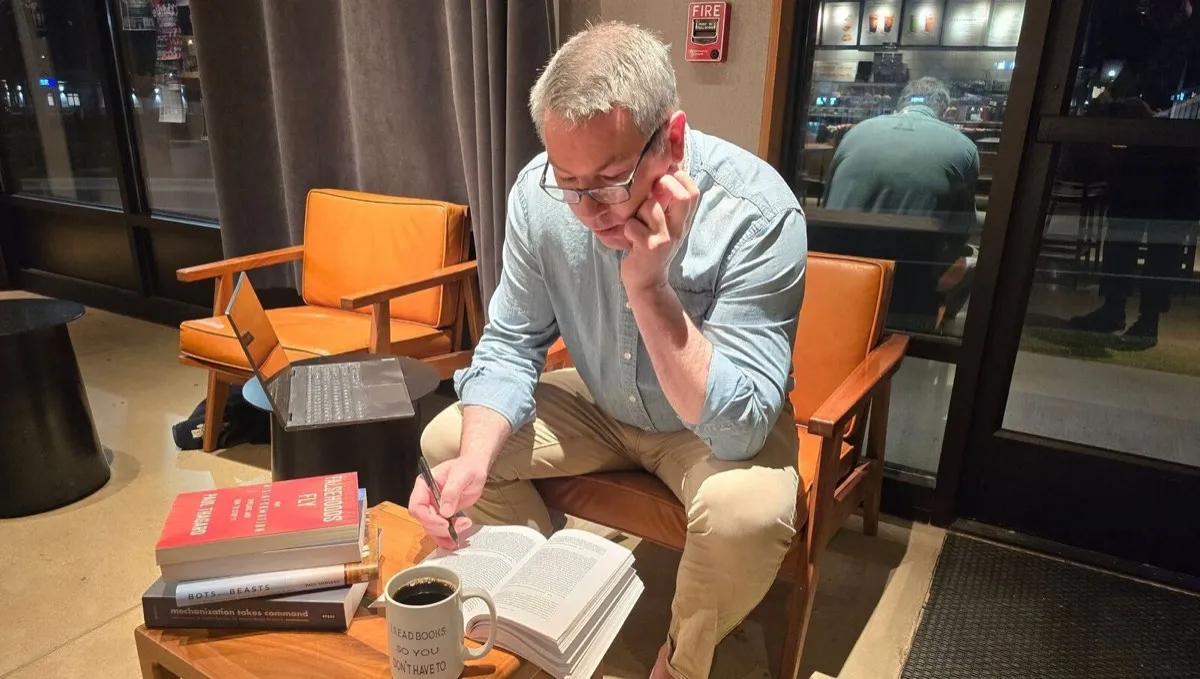
Three decades building the technology. A decade asking what it's doing to us.
Pat Scannell spent thirty years at the front of the technology industry, with leadership roles in the early internet, mobile computing, the internet of things, cloud and AI. Then he stepped back to ask a plain question: what is all of this doing to the way people think?
The answer became a research program spanning neuroscience, evolutionary psychology, technology and social systems, four books in various stages of publication, and a working life split between writing and advising leaders in academia, policy and national security.
- Author of The Disruption of Thought, Brill, 2026. Three further books in progress.
- Advisor to the U.S. Department of Defense and Department of Homeland Security.
- Marshall Memorial Fellow of the German Marshall Fund.
- Steering committee, IEEE Transactions on Technology and Society.
- Founder of two makerspaces focused on community resilience.
The books, continued.
Two essays a month on how technology is changing the way we think. The introduction to the first book, with Vint Cerf's foreword, arrives with your first email.